

Pre-Engineered School Building
Pre-Engineered School Building
"Modular Learning Spaces for Urgent Educational Needs"
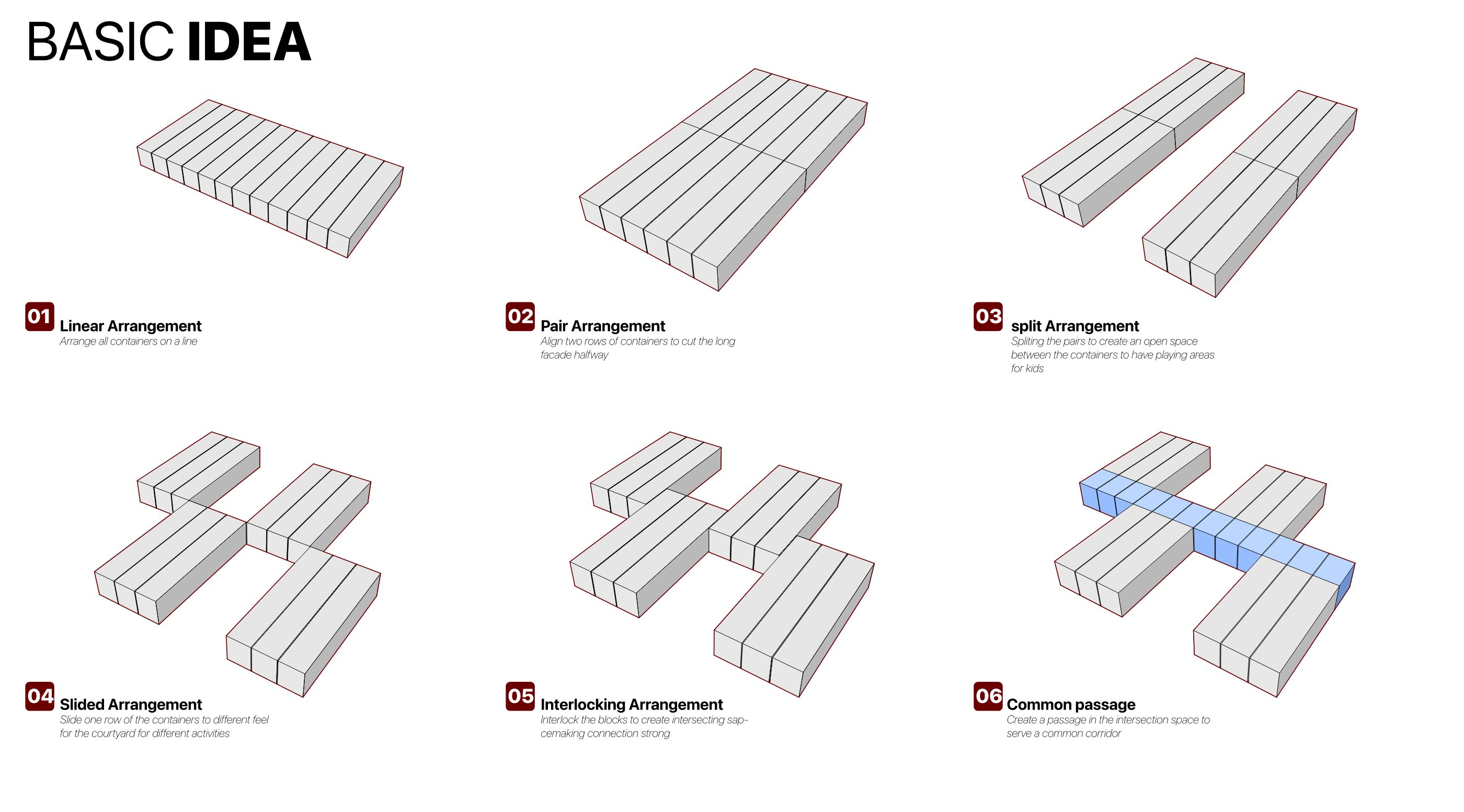
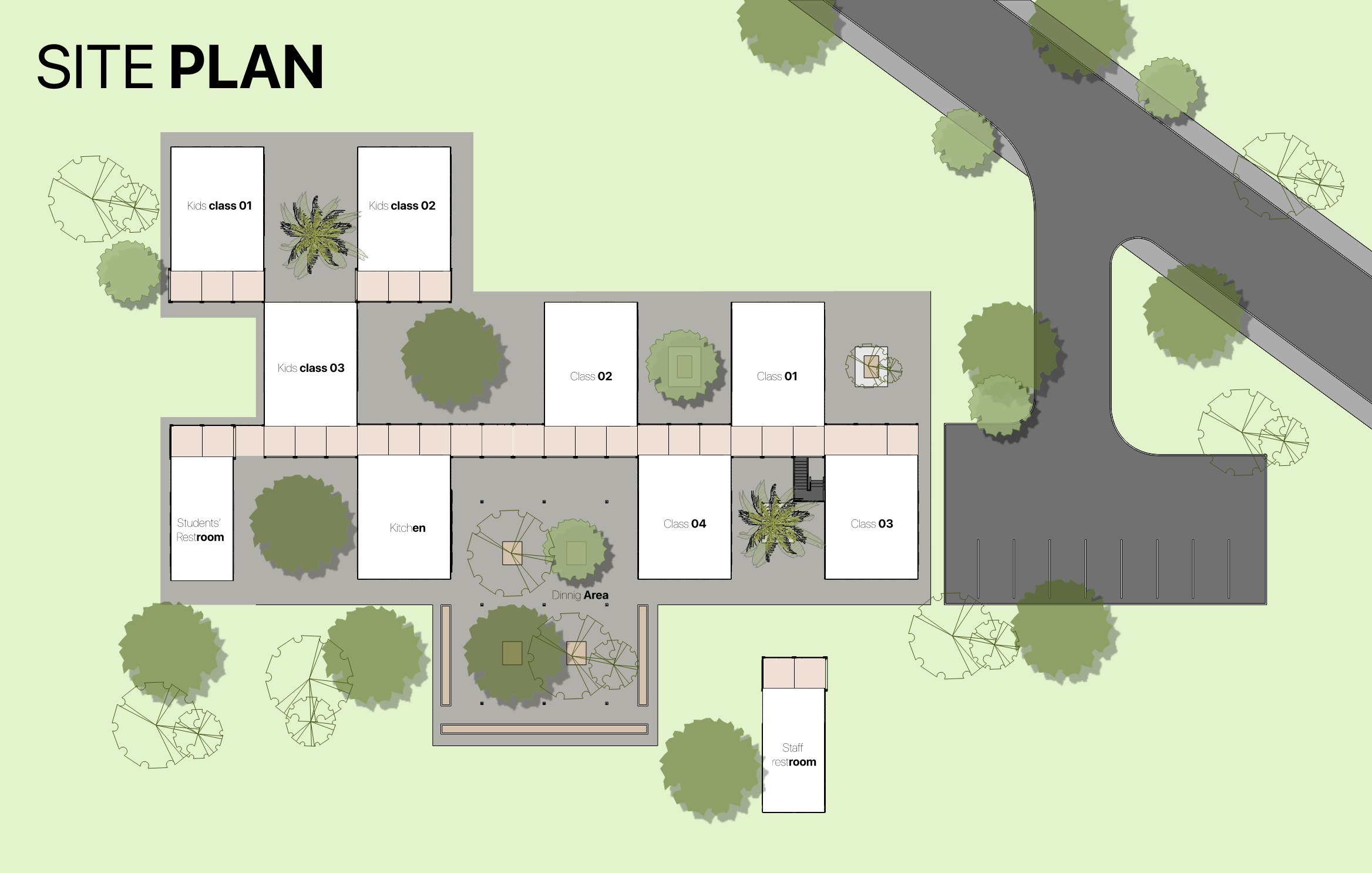
The use of shipping containers allowed for a quick, flexible, and scalable classroom solution. Each unit was configured to optimize space, light, and ventilation, with the ability to grow or shift as needs evolve. The design includes multiple layout strategies linear, interlocking, and split to support both learning and play.
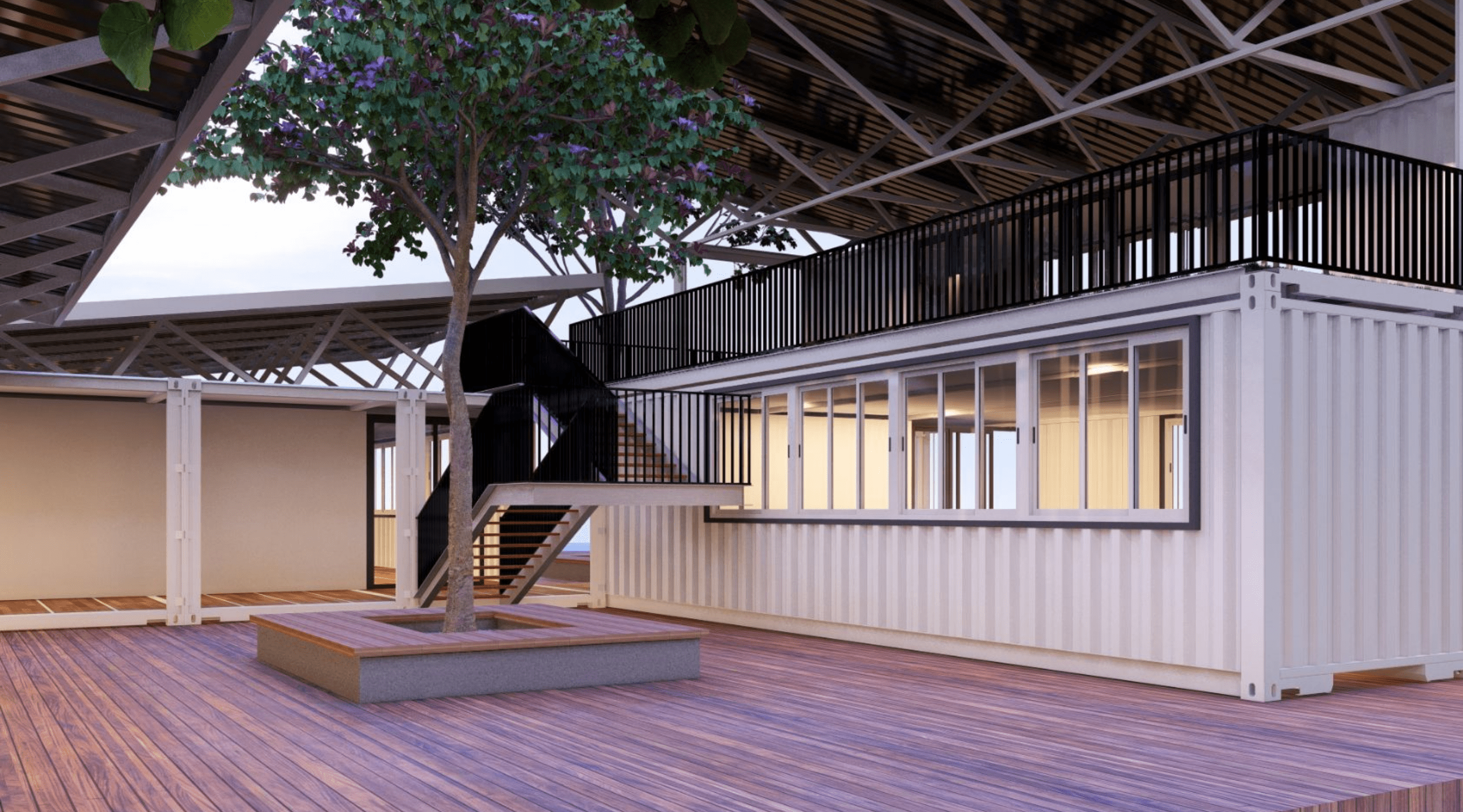
Insulation, ventilation, and rain protection were major priorities. Interior walls use wool with gypsum board finishes, while fiber cement boards can be used to protect exterior exposed surfaces. Covered circulation paths and elevated decking support drainage, ensuring comfort and usability even in harsh weather conditions.
Despite being temporary, the school is designed with long-term dignity in mind. Thoughtful details such as ceramic tile flooring, dedicated staff and student restrooms, and child-safe layouts create a welcoming, structured environment that respects both learners and educators.
Design Highlights
Modular Units: Classrooms are constructed using standard 40-foot containers arranged in flexible formats (linear, interlocked, split) to optimize circulation, daylight, and play areas.
Climate Responsiveness: Heat insulation is provided through wool and gypsum board interiors, with fiber cement cladding on exposed areas. Covered walkways and rainwater management systems ensure weather resilience.
User Comfort: Flooring includes ceramic tiles for classrooms and composite boards outdoors for water drainage. Wide corridors, designated staff/student restrooms, and a dining pavilion enhance comfort and functionality.
Community Impact: The temporary school provides a safe, structured learning space while the permanent campus is under development—ensuring learning continuity for vulnerable children.
Massing Study
The massing study explores various container arrangements to optimize functionality, circulation, and spatial experience. By testing linear, paired, split, and interlocking layouts, the design team identified solutions that enhance accessibility, encourage interaction, and create playful, open courtyards. These configurations allow for flexible learning environments while ensuring natural light, ventilation, and efficient use of the site—making the temporary school feel welcoming, dynamic, and human-centered.
Designing for Now, Preparing for the Future
The Kwigira Temporary School is more than a quick solution—it’s a thoughtful response to an urgent need, crafted with care, dignity, and purpose. By leveraging modular construction and climate-sensitive design, this project offers children a safe and inspiring place to learn while the permanent campus is developed.
It reflects ELEVATE Design Group’s commitment to using architecture as a tool for resilience, empowerment, and long-term community transformation.